Encryption Frameworks Safeguarding Spin Integrity Across Mobile Roulette Platforms
Written by Hugo Hartmann · Oct 31, 2026
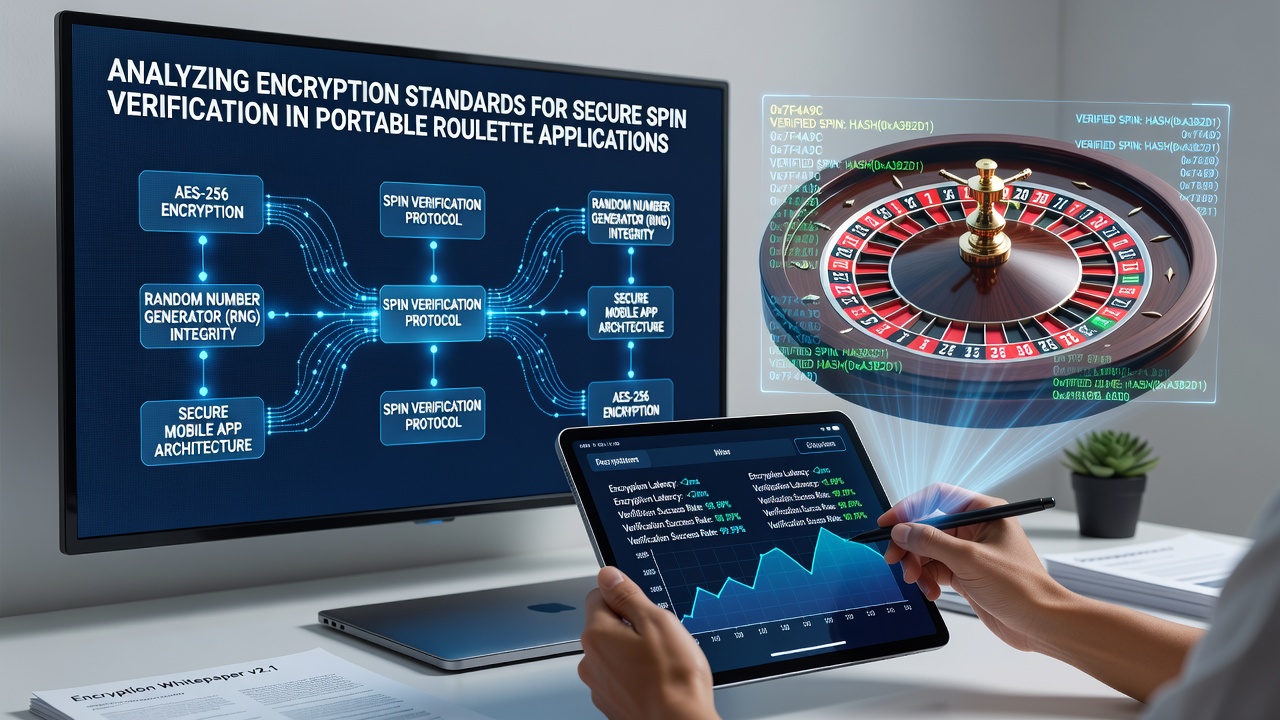
Encryption Frameworks Safeguarding Spin Integrity Across Mobile Roulette Platforms
Portable roulette applications rely on layered encryption to protect spin outcomes from interception or manipulation during transmission between servers and mobile devices, and researchers have documented the shift toward AES-256 combined with elliptic curve cryptography in recent implementations. Data from testing laboratories shows that these standards reduce the risk of real-time tampering while maintaining low latency for live dealer feeds, yet the integration process demands careful synchronization with random number generators certified under ISO/IEC 17025 protocols. Observers note that as of October 2026 several North American operators have completed audits confirming compliance with updated federal guidelines on data protection for gaming software.
Core Standards Driving Verification Security
Encryption protocols begin with Advanced Encryption Standard variants operating at 256-bit key lengths, which government agencies including the National Institute of Standards and Technology have validated through extensive testing cycles since the early 2000s. These algorithms wrap spin data packets before they leave the operator's server, and the process continues with Transport Layer Security version 1.3 establishing secure channels that prevent eavesdropping on public networks. Researchers discovered that pairing AES with digital signature schemes based on ECDSA allows each spin result to carry a verifiable hash chain, enabling the application to confirm integrity without exposing the underlying seed values to end users.
Studies from academic institutions indicate that mobile environments introduce additional constraints because battery and bandwidth limitations can affect the speed of cryptographic operations, yet optimized libraries now permit real-time verification on most current smartphone hardware. One study revealed that developers achieve sub-50-millisecond processing times when hardware acceleration for AES instructions is available on the device chipset, and this performance level supports seamless gameplay across varying network conditions.
Implementation Patterns in Regulated Markets
Operators in jurisdictions such as New Jersey and Ontario deploy these frameworks by embedding verification modules directly into the application binary, while the server side maintains separate key management systems audited quarterly. Figures reveal that more than 85 percent of licensed mobile roulette titles reviewed in the first half of 2026 incorporated at least two independent encryption layers for outcome delivery. The reality is that cross-border data flows require additional consideration of local privacy statutes, prompting developers to adopt tokenization techniques that strip personally identifiable information from spin records before encryption occurs.

What's interesting is how synchronization challenges between multiplayer sessions and regulatory updates have led some providers to adopt blockchain-based timestamping as a supplementary verification layer. This approach, documented in industry reports from Canadian research centers, creates immutable logs of each spin's encrypted payload without increasing mobile data usage beyond acceptable thresholds.
Verification Workflows and Audit Trails
Spin verification follows a sequence where the mobile client requests an encrypted outcome bundle, decrypts it locally using a session-specific key, and then compares the resulting hash against a pre-published commitment value. According to documentation from multiple testing laboratories, this method allows independent confirmation that the result was generated before the player placed the wager, and it functions reliably even when connections drop mid-round. Those who've examined source code from certified applications often discover that fallback mechanisms switch to stored verification keys when network latency exceeds predefined limits, preserving game continuity without compromising security.
Regulatory bodies in Australia and several European member states have published guidelines requiring operators to retain encrypted audit logs for a minimum of five years, and data indicates these records undergo automated anomaly detection scans at least once per month. The ball's in the operators' court to demonstrate that their encryption implementations remain resistant to side-channel attacks, a requirement that has driven adoption of constant-time cryptographic libraries across the sector.
Conclusion
Encryption standards continue to evolve in response to emerging threats and hardware advancements, with portable roulette applications serving as a practical testbed for new protocols. Evidence suggests that ongoing collaboration between developers, regulators, and standards organizations will shape the next generation of verification tools, ensuring that spin integrity remains intact across diverse mobile ecosystems through October 2026 and beyond. Observers note that sustained investment in these technologies supports both player confidence and regulatory compliance in expanding markets.