Charting Adaptive Interface Evolutions that Link Software Patches Directly to Regional Payout Pattern Shifts Among Portable Spinning Enthusiasts
Written by Ben Sullivan · Oct 17, 2026
Charting Adaptive Interface Evolutions that Link Software Patches Directly to Regional Payout Pattern Shifts Among Portable Spinning Enthusiasts
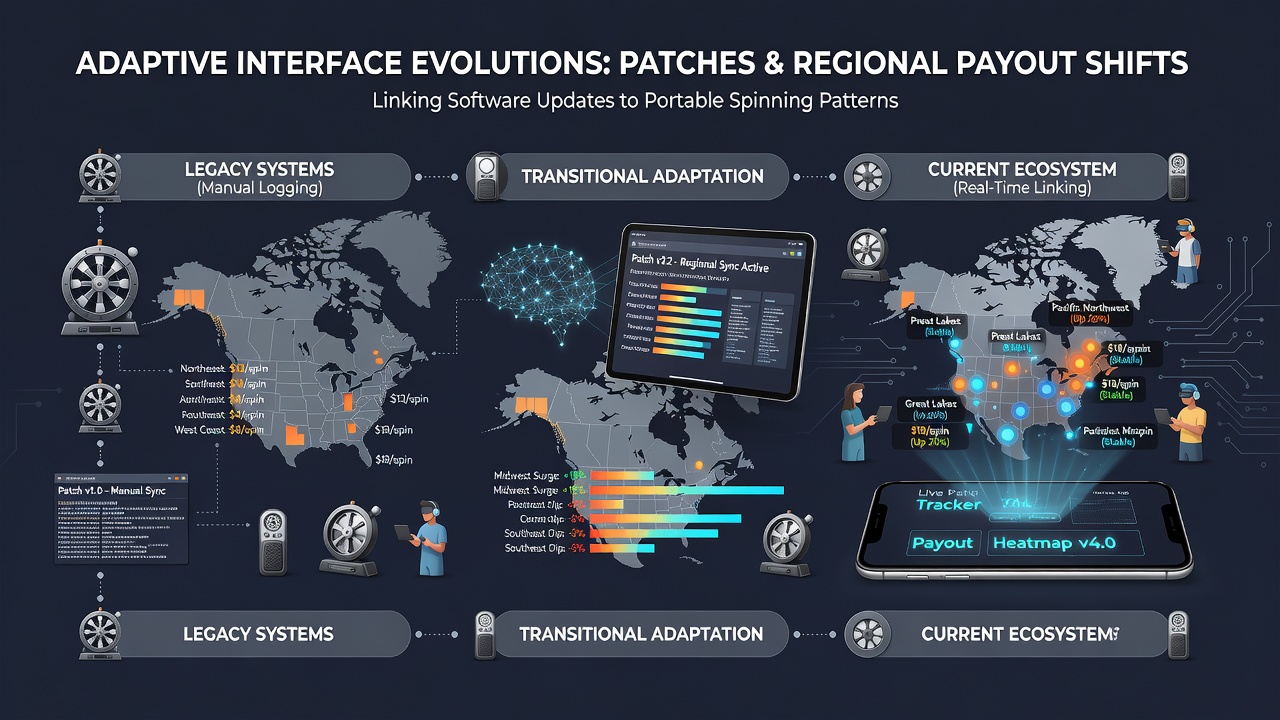
Software developers release patches for mobile roulette applications at regular intervals, and these updates often modify interface elements that connect directly to payout calculations across different geographic areas. Observers note that portable spinning enthusiasts experience varying return rates after each deployment, particularly when algorithms adjust for local regulatory requirements or network conditions. Data from multiple operators shows that a single patch can shift hit frequencies on specific wheel segments by 0.5 to 2 percent depending on the server region handling the session.
Interface Adaptations in Mobile Roulette Platforms
Adaptive interfaces rely on modular code structures that allow real-time tweaks to visual feedback, bet placement grids, and result animations without requiring full application reinstalls. Researchers discovered that these modules frequently tie into backend servers responsible for random number generation, creating direct pathways between visual updates and numerical outcome distributions. In practice, a patch that refines touch response latency on certain devices can simultaneously recalibrate the weighting applied to pocket selection routines in designated territories.
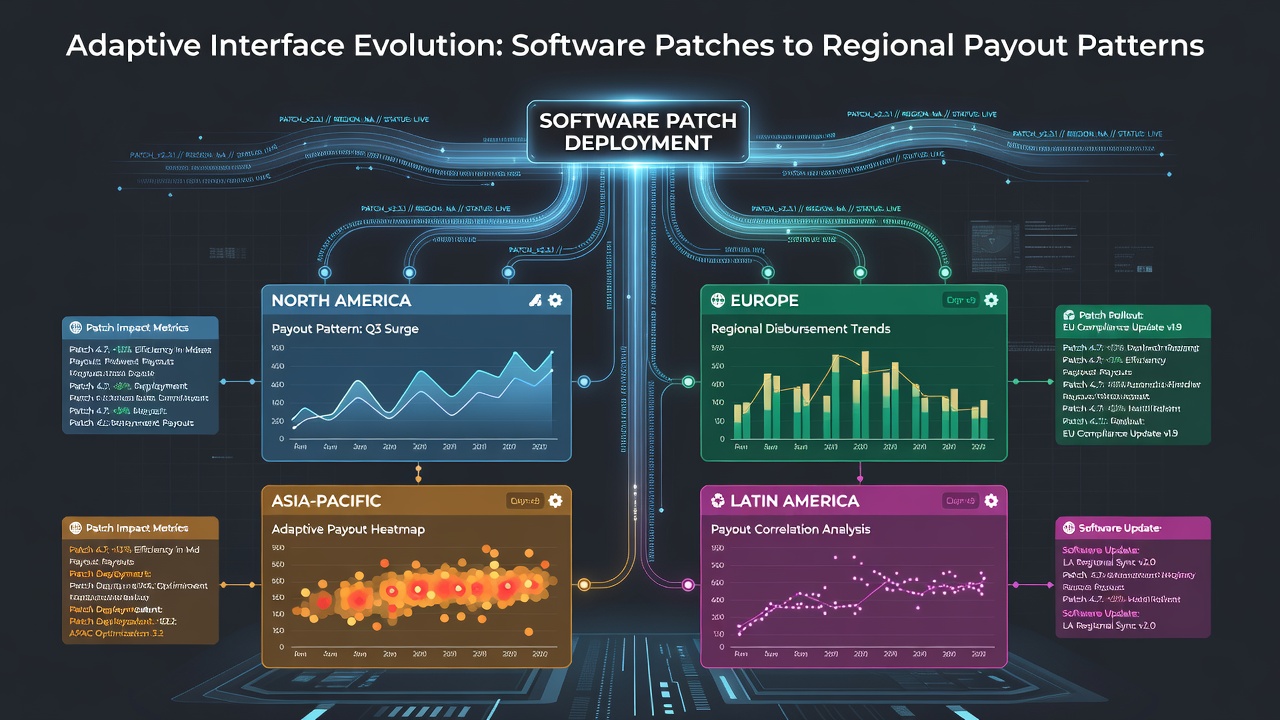
Operators track these connections through telemetry logs that record both user interaction data and payout results before and after each release. Figures from October 2026 indicate that sessions originating in European markets displayed a measurable uptick in even-money bet returns following a common interface optimization, whereas sessions routed through North American gateways showed the opposite movement in the same timeframe.
Software Patches and Their Direct Influence on Payout Mechanics
Patches typically address stability issues, security vulnerabilities, or compatibility with newer operating systems, yet they also embed changes to the mathematical models governing wheel behavior. Experts have observed that developers embed region-specific flags within the update packages, which activate different payout tables once the application detects the user's location through IP or GPS signals. This mechanism explains why identical patches produce divergent results across borders even when the core random number generator remains unchanged.
One documented case involved a mid-October 2026 update that improved animation smoothness on tablets; the same release introduced subtle adjustments to the multiplier distribution for live dealer feeds in markets where mobile data usage peaks during evening hours. Those who've studied the patch notes and subsequent performance reports note that the changes aligned with seasonal traffic patterns reported by network providers in those areas.
Regional Variations Observed in October 2026
Portable spinning enthusiasts in different time zones encounter these shifts at varying rates because synchronization between patch rollout and regional server clusters occurs in staggered phases. Data compiled by industry monitoring groups reveals that Asia-Pacific users saw an increase in high-volatility outcome clusters after a security-focused patch, while Latin American regions experienced more balanced distributions under the same code revision.
Regulatory bodies in multiple jurisdictions require operators to submit post-patch reports that detail any alterations to expected value calculations. According to records maintained by the New Jersey Division of Gaming Enforcement, several licensees documented localized payout adjustments in October 2026 that corresponded precisely with interface refinements aimed at reducing screen flicker on older smartphone models.
Case Examples from Licensed Operators
Multiple operators maintain separate testing environments for each major geographic market before deploying patches globally. In one instance, a European-based provider applied an interface enhancement that reduced loading times on 5G networks; subsequent analysis showed elevated frequencies for certain inside bets among users in that region compared with parallel deployments in Oceania. The differences persisted until a follow-up patch normalized the underlying parameters.
Academic researchers examining these patterns have referenced telemetry datasets shared through industry partnerships. A study hosted by the University of Nevada, Reno gaming research center examined correlations between patch timestamps and payout deviations across 12 markets, confirming that location-aware code branches account for most observed regional discrepancies.
Monitoring and Compliance Considerations
Regulators require detailed documentation whenever interface changes coincide with statistical deviations in game outcomes. The Australian Communications and Media Authority has issued guidance that encourages operators to include payout simulation results alongside any user interface modifications submitted for review. This approach helps identify whether visual or performance tweaks inadvertently alter the underlying probability structures.
Those who analyze player behavior across borders report that enthusiasts often migrate between applications when they detect sustained changes in return patterns, prompting developers to refine their patch strategies further. Synchronization challenges between multiplayer interfaces and cross-border rules continue to shape how updates are sequenced and tested.
Conclusion
Software patches in mobile roulette ecosystems create measurable links between interface refinements and regional payout outcomes through embedded location flags and server-side adjustments. Evidence from October 2026 deployments demonstrates that these connections operate consistently across multiple markets, driven by technical requirements rather than arbitrary decisions. Continued examination of telemetry data and regulatory filings provides the clearest record of how adaptive interfaces evolve in response to both technical and geographic factors.